7 Best Ways To Maintain Safe Pet Play Environments?

Time:2026-10-04 Author:Charlotte
0%

Safe pet play begins with a realistic question: How To Maintain Safe Pet Play Environments when animals explore, chase, chew, and sometimes react unpredictably? A bright room and expensive toys cannot guarantee safety. Experience matters. A loose gate, frayed rope, or overheated puppy can change play within seconds.

The American Pet Products Association’s 2023–2024 National Pet Owners Survey estimated that 66% of U.S. households owned a pet. That scale makes everyday play safety a serious welfare concern, not a minor housekeeping task. The Centers for Disease Control and Prevention reports that about 4.5 million dog bites occur annually in the United States. Supervision, controlled introductions, and suitable equipment therefore deserve consistent attention. These seven practical methods focus on hazard checks, age-appropriate toys, clean surfaces, secure boundaries, water access, social signals, and emergency preparation.

Look closely at the details. A rubber ball should match the animal’s mouth size. A play mat should stay flat, even after repeated washing. Cats need escape routes, while older dogs may need softer flooring. The American Veterinary Medical Association recommends observing behavior and consulting veterinary professionals when health or aggression concerns appear. Still, no checklist is perfect. I have seen well-planned spaces fail because a caregiver became distracted for only a minute. That uncomfortable truth deserves space here. Safe play is not a single purchase or a one-time inspection. It is a repeated habit, adjusted as pets grow, heal, learn, and reveal new preferences.
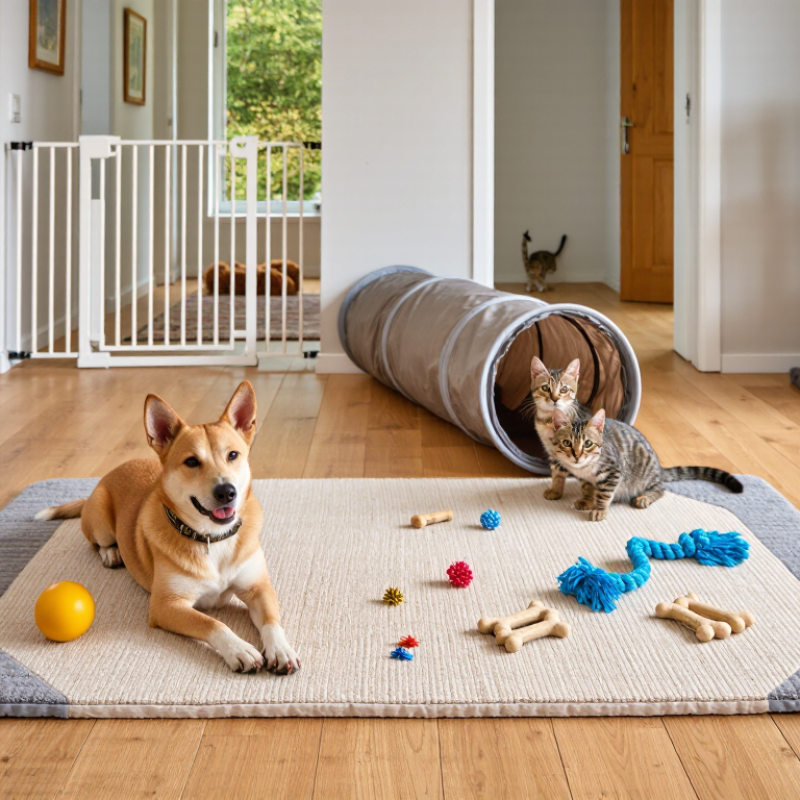
7 Best Ways To Maintain Safe Pet Play Environments?

Assess the Play Area for Physical Hazards

Before letting a pet play, walk through the area at the animal’s eye level. Loose screws, cracked plastic, splinters, and exposed nails can cause painful injuries. Check fences, gates, and barriers for gaps wider than your pet’s head. Puppies and small animals can squeeze through surprisingly narrow spaces. Remove tangled cords, unstable furniture, and objects that may fall when bumped. Look for hot pavement, sharp stones, standing water, and poisonous plants near outdoor play areas. A clean floor is not always a safe floor.

Observe how your pet actually moves, not how you expect it to move. A dog may leap from a platform, while a cat may climb higher than planned. Soft edges and secure surfaces reduce falls and bruises. Keep toys away if they have broken parts, loose strings, or pieces small enough to swallow. I once overlooked a raised metal edge beneath a play tunnel; it was harmless to my eyes but risky for a curious paw. That mistake changed my inspection routine. I now test every corner by hand and shake each structure gently. Ask a veterinarian or qualified animal-care professional about hazards specific to your pet’s age, breed, size, and health. Recheck the space after storms, repairs, or new furniture. Safety can change overnight.

Choose Age- and Species-Appropriate Toys and Equipment

7 Best Ways To Maintain Safe Pet Play Environments?

Choose Age- and Species-Appropriate Toys and Equipment

The American Pet Products Association’s 2023–2024 National Pet Owners Survey reports that 66% of U.S. households own a pet. That scale makes toy selection a practical safety issue, not a minor detail. Puppies need durable chew toys without detachable pieces. Kittens often prefer lightweight toys, but loose strings require direct supervision. A rabbit needs untreated, chew-safe materials, while birds need equipment free from sharp edges and unsafe coatings.

Size matters greatly. A small ball can obstruct a large dog’s airway, while a heavy toy may injure a kitten or older pet. Veterinary guidance commonly recommends matching toys with an animal’s mouth size, chewing strength, age, and natural behavior. Senior pets may need softer items that reduce pressure on worn teeth and joints. Check every toy before use. Look for cracks, frayed fabric, exposed filling, or loose parts.

Replace damaged toys immediately. Not later.

In my experience, owners often choose toys by appearance rather than risk. I have made that mistake too. A toy that seems entertaining may encourage swallowing, entanglement, or excessive jumping. The American Veterinary Medical Association advises supervision and regular inspection, especially when animals play with unfamiliar equipment. Observe how each pet actually uses the toy, because the label cannot predict every behavior.

Create Safe Boundaries for Indoor and Outdoor Play

Create Safe Boundaries for Indoor and Outdoor Play

Safe pet play begins with boundaries, not expensive equipment. Inspect each room at the animal’s eye level. Loose cords, toxic plants, sharp corners, and open doors can cause emergencies. Use sturdy gates to separate rest areas from energetic games. A cat may need vertical escape space, while a dog needs a clear, non-slip route. These details matter as pet ownership reaches 66% of U.S. households, or about 86.9 million homes, according to the American Pet Products Association’s 2023–2024 National Pet Owners Survey. More pets also create more varied safety needs.

Outdoor boundaries need equal attention. Check fences for gaps, climbable objects, and loose panels before releasing a pet. Keep gates latched, even during short play sessions. Provide shade and water. Test hot surfaces with your hand. The Centers for Disease Control and Prevention reports about 4.5 million dog bites annually in the United States, with children facing particularly high risk. Calm supervision matters more than simply building a taller fence. Watch body language: tucked tails, pinned ears, hiding, or stiff posture may show that play has stopped being comfortable. Separate animals early, using a barrier rather than your hands. I would not trust a “pet-proof” label alone. My first layout may still miss a low cord or narrow escape gap. Recheck boundaries after moving furniture, storms, or adding another animal.

7 Best Ways to Maintain Safe Pet Play Environments

Create safe boundaries for indoor and outdoor play

This seven-point checklist covers the essential controls for safer pet play: supervision, secure boundaries, hazard removal, toy inspection, pet separation, weather protection, and emergency access. Complete every check before allowing unsupervised play.

Supervise Interactions and Manage Risky Behavior

Safe pet play begins with active supervision, not occasional glances. Stay close enough to interrupt quickly. Watch body language, including stiff posture, pinned ears, lip licking, or repeated hiding. These signs may indicate stress before growling or snapping occurs. Give each animal an escape area with open access. Never force a nervous pet to continue playing.

Manage the environment before play starts. Remove sharp objects, loose cords, small toys, and food that could trigger guarding. Use barriers when introducing unfamiliar animals. Keep play sessions short, especially for puppies, older pets, or animals recovering from illness. Change the activity when excitement becomes frantic. Chasing, wrestling, and rough biting can become unsafe within seconds.

Stay close. Act early.

If one pet repeatedly corners another, calmly separate them without shouting or grabbing collars during a struggle. A towel, barrier, or leash handled by an adult may create safer distance. Avoid punishment, which can increase fear and hide warning signals. Offer a quiet break, then reassess the setting. In my experience, owners often wait for obvious aggression, but the earlier signs were already present. I have also underestimated how quickly a friendly game can change, so written household rules help everyone respond consistently. For repeated fights, injuries, or sudden behavior changes, seek advice from a veterinarian or qualified animal behavior professional. Record what happened, including triggers, duration, and recovery time. That detail can guide a more reliable safety plan.

7 Best Ways To Maintain Safe Pet Play Environments? - Supervise Interactions and Manage Risky Behavior

No. Safety Practice Primary Risk Managed Recommended Action Suggested Frequency Risk Level
1 Supervise Every Interaction Bites, scratches, chasing, and sudden conflict Stay close enough to interrupt play immediately, especially around children, unfamiliar animals, or high-energy pets. Every play session Moderate
2 Use Separate Play Zones Resource guarding and unwanted contact Create distinct areas for feeding, resting, and active play. Use gates or secure barriers when pets need space. Set up before play; review weekly Low
3 Inspect Toys and Equipment Choking, swallowing, cuts, and entanglement Remove broken toys, loose strings, sharp fragments, and pieces small enough to swallow. Choose toys suited to the pet’s size and play style. Before each session and after heavy use Moderate
4 Recognize Stress Signals Escalation caused by fear, overstimulation, or discomfort Pause play when a pet hides, freezes, repeatedly avoids contact, growls, hisses, shows pinned ears, or displays a stiff body posture. Continuously during play High
5 Interrupt Risky Behavior Calmly Rough play, repeated mounting, chasing, and guarding Use a calm voice, redirect attention with a suitable toy or cue, and provide a short separation period. Avoid physical punishment. Whenever risky behavior begins High
6 Match Playmates and Activities Carefully Size differences, incompatible play styles, and accidental injury Pair animals with compatible energy levels and communication styles. Introduce unfamiliar pets gradually in a neutral, controlled area. Before every new introduction Moderate
7 Keep an Emergency Response Plan Delayed care after injury or sudden illness Keep a pet first-aid kit, veterinarian contact details, and a secure carrier or leash accessible. Seek professional care for serious wounds, breathing problems, or persistent pain. Check supplies monthly Low

Inspect, Clean, and Update the Play Environment Regularly

A safe pet play environment changes through constant inspection. The APPA 2023–2024 National Pet Owners Survey reports that 66% of U.S. households own a pet. That scale makes routine safety checks important.

Walk through the area before every active play session. Look for loose screws, cracked plastic, exposed nails, torn fabric, and splintered wood. Test gates and latches with one hand. A secure-looking latch can still fail under pressure. Remove small parts that could be swallowed.

The CDC reports about 4.5 million dog bites yearly in the United States, and one in five requires medical attention. Supervision cannot replace maintenance.

Cleaning should match the animal and the surface. Wash hard toys with warm water and pet-safe detergent, then dry them completely. Launder fabric items separately when possible. Replace anything that keeps a strong odor or shows hidden mold.

Update the environment as the pet grows. A puppy may need softer barriers, while a strong adult dog may require reinforced fencing. Measure gaps carefully; bodies and paws find weaknesses quickly. Rotate toys to reduce wear and boredom. Check them again afterward.

Honestly, many owners inspect only after something breaks. That habit needs reconsideration. Keep a simple date-based log for repairs and replacements.

Veterinary guidance from the AVMA supports preventive care, yet daily play-area checks are often overlooked. Small adjustments can prevent a frightened pet, a damaged tooth, or an avoidable emergency.

FAQS

How should I choose a toy for my pet’s age and species?

Match the toy with the animal’s mouth size, chewing strength, age, and natural behavior. Puppies need sturdy chew toys without detachable pieces.

Why does toy size matter?

A small ball can block a large dog’s airway. A heavy toy may strain a kitten or an older pet. Size matters.

Which toys may suit rabbits and birds?

Rabbits need untreated, chew-safe materials. Bird equipment should have no sharp edges or unsafe coatings. Inspect the surfaces carefully.

How often should pet toys be inspected?

Check toys before every use. Look for cracks, frayed fabric, exposed filling, or loose parts. Replace damaged toys immediately.

Should kittens play with loose strings?

Only with direct supervision. Loose strings can cause entanglement or swallowing risks. Remove them when the play session ends.

What signs show that play is becoming stressful?

Watch for stiff posture, pinned ears, lip licking, repeated hiding, or sudden avoidance. These signs may appear before obvious aggression.

How can I make play safer between unfamiliar animals?

Use barriers and provide separate escape areas. Keep sessions short. Never force a nervous animal to continue playing.

What should I do when play becomes too rough?

Calmly separate the animals early. A towel, barrier, or adult-handled leash can create distance. Avoid shouting or grabbing collars during a struggle.

What mistakes might owners make during pet play?

I sometimes chose toys by appearance instead of risk. Owners may also wait for aggression, although warning signs appeared earlier. Written household rules help.

Conclusion

How To Maintain Safe Pet Play Environments begins with carefully assessing the play area for hazards such as sharp edges, loose parts, toxic substances, unstable furniture, or escape routes. Select toys and equipment that match the pet’s age, size, species, strength, and activity level, and remove anything that can be easily swallowed or broken. For indoor and outdoor play, create clear boundaries that keep pets away from traffic, dangerous plants, harsh weather, and other unsafe areas.

Active supervision is also essential. Watch for aggressive, overly excited, or destructive behavior, and calmly redirect pets before injuries occur. Regularly inspect toys, fences, flooring, climbing structures, and other equipment for damage. Clean the play environment to reduce dirt, germs, and unpleasant odors, and replace worn or unsafe items promptly. By combining thoughtful preparation, responsible supervision, and routine maintenance, pet owners can create a secure, stimulating, and enjoyable space that supports healthy play.

Charlotte

Charlotte

Charlotte is a seasoned marketing professional with a deep understanding of the company's portfolio and a passion for elevating its presence in the market. With a keen eye for detail and a commitment to excellence, she ensures that our professional blog is regularly updated with insightful articles......